Find Santa


About the project
Find Santa is a gamified geography learning concept where kids explore the world to solve a festive mystery: Santa is missing, and the only way to track him down is to learn about the cities he visited.
The challenge: One size fits none. Children’s UX usually targets narrow two-year brackets because cognitive and motor skills evolve rapidly.
Find Santa bridges a massive developmental gap, creating an experience that scales from a 6-year-old reader to an independent 12-year-old explorer.

The strategy
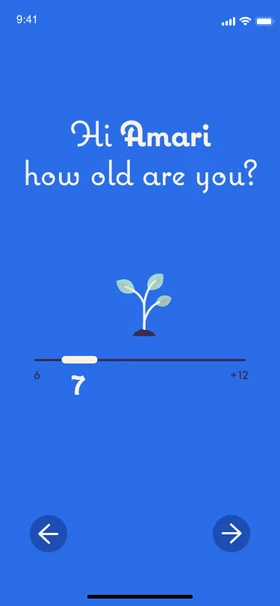
The slider isn’t just a playful introduction, it sets the global state for the entire product experience. By choosing an age, the system instantly configures two major structural variables on the subsequent map screens:
| The city scope (Cognitive scaffolding) | The fact density (Content scaffolding) | |
|---|---|---|
| For 6 years old / early readers |
The world map unlocks only a handful of milestone cities at a time, keeping the exploration path linear, focused, and free from overwhelming choice. | Text takes a backseat. Trivia is delivered via prominent audio cues, large custom illustrations, and bite-sized fun facts. |
| For 12 years old / older explorers |
The map opens wide into a dense global grid, offering branching navigation paths and multi-city puzzles to solve. | The interface shifts to deeper, text-forward contextual history, hidden geographic clues, and more advanced quiz elements. |
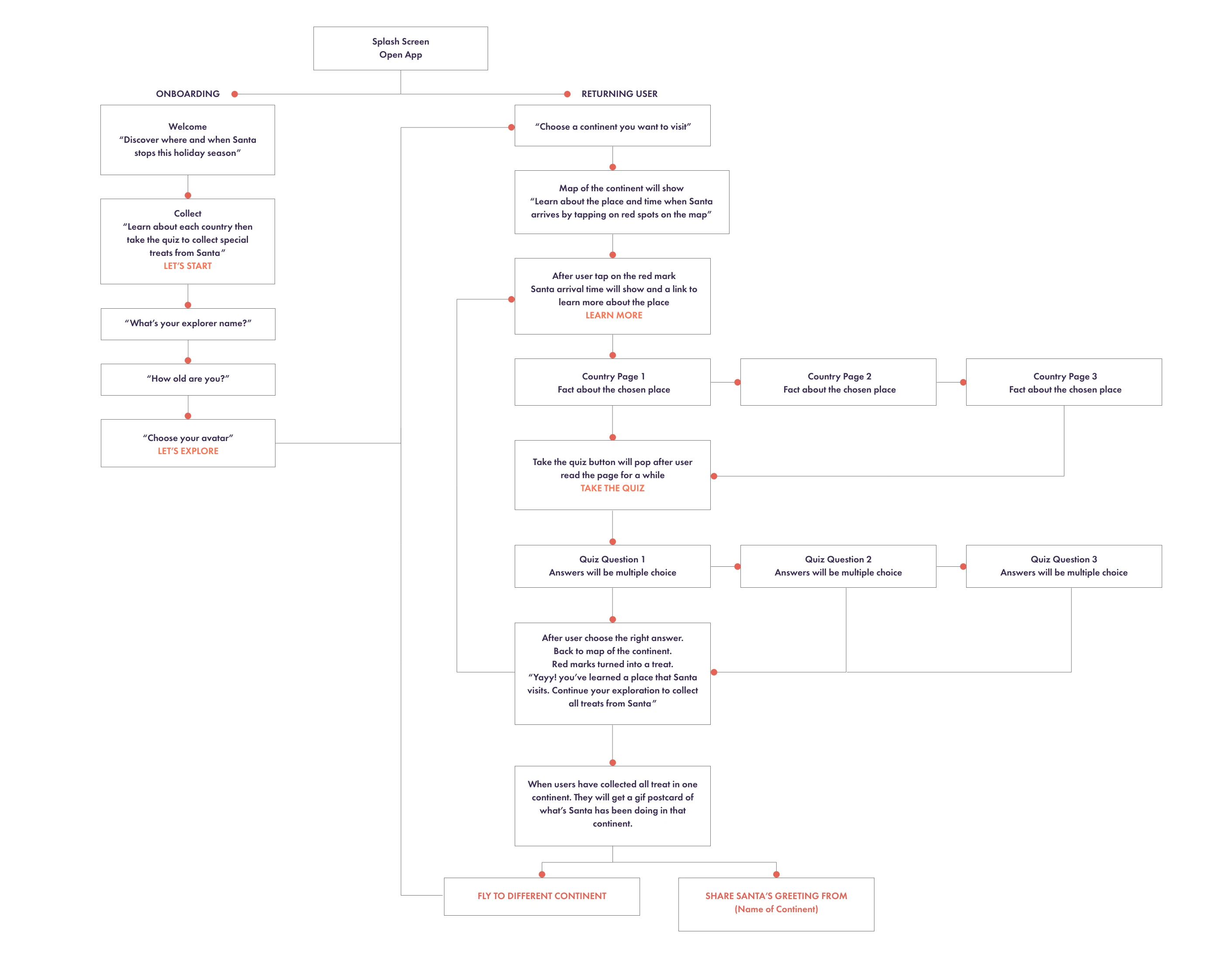
To minimize friction and protect the core gameplay loop, the user flow separates configuration from exploration.
Visual style
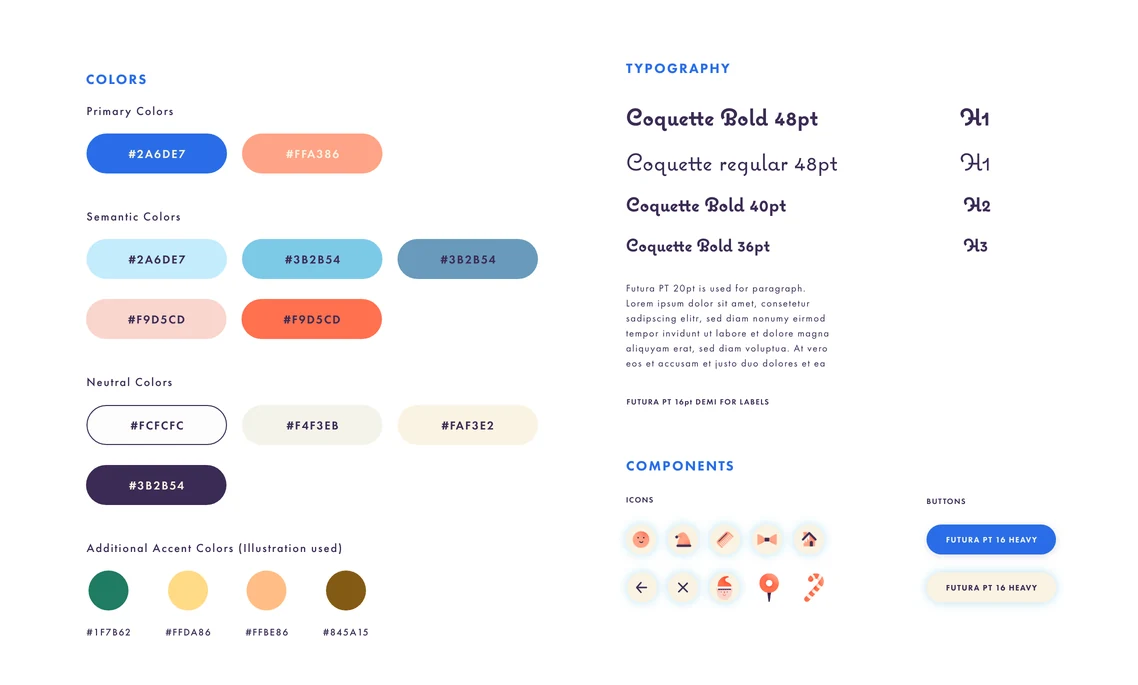
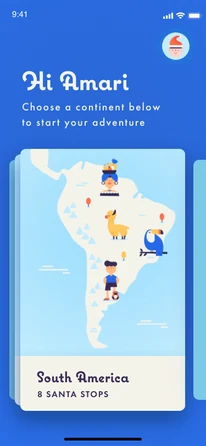
Standard Christmas designs rely heavily on traditional forest green and deep crimson, which can feel visually heavy and culturally limited.
I chose a vibrant, open Blue Cobalt as the canvas and a punchy Red-Orange as the primary interaction accent. This iteration keeps the palette feeling festive and energetic, while ensuring the global interface scales beautifully outside of just the winter holidays.
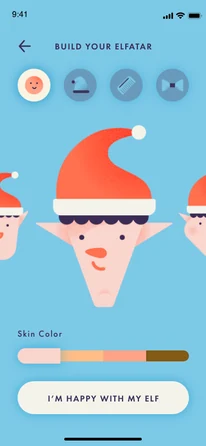
Instead of flat, sterile UI components, simple and modern illustration serves as the primary visual asset.

Core mechanic
Capturing a child’s attention in a digital space is easy, but keeping it without relying on dopamine-heavy, addictive dark patterns is a significant challenge. Find Santa uses a purposeful storytelling loop to build meaningful momentum.
Rather than abstract points or flashy animations that cause overstimulation, rewards are tied directly to the narrative progression: every city fact learned yields a physical treat icon and a new contextual clue that brings them one step closer to tracking down Santa.
When a child visits a new global city, they unlock unique localized trivia.
Find Santa is a self-initiated concept. Designed to explore how technology can adapt to human growth. It’s a playground for loops that:
I am deeply drawn to projects that cross screens into everyday life; from connected hardware to calm technology. If you are building intentional, systems-driven products for families or physical spaces, let’s collaborate.